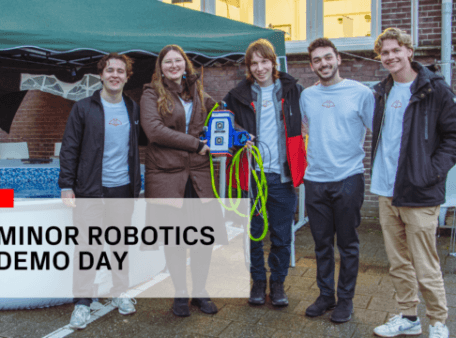
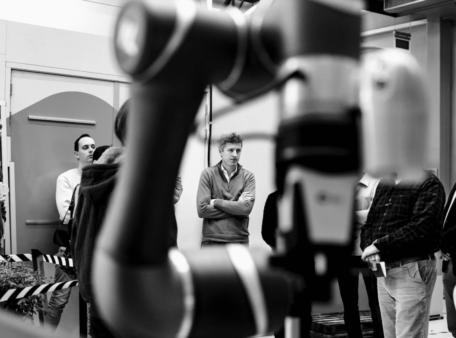
Lennart Bult, Swarm Operations
Okay, maybe permanent flying is exaggerating a bit, at some point batteries need recharging, but it remains the overall design essence. For team member Lennart, this is the main challenge: “We want to optimise the charging process so that you have as many drones in the air as possible with a minimum amount of charging pads.”
Each Crazyflie drone can buzz off for seven minutes before needing a 35 minute recharge. Through the use of wireless charging pads, human intervention is cancelled out, the alternative being manual battery replacement.
Seppe van den Bergh, Swarm operations
But challenges go way further than just battery strategy. Student Seppe identifies his favourite obstacle-to-overcome in collision avoidence: “This does not only include collisions between drones, but also with stationary objects,” Seppe tells us. “By deploying sensors and proper coding, these risks are minimised. Yet the strength of a robust system doesn’t lie in reducing risks, it lies in handling them when they happen.”
Servaas Clerckx, Simulations
Servaas’s favourite challenge ties in with that of his colleague: round-trip latency. Or in English: the time it takes for the flying AI-insects to send their observations and receive commands in return. “Depending on how much time this transfer of information takes up, we could for instance let the drones react to more unpredictable objects such as humans.” Perhaps actual flies could also identify as such an object.