The problem: hours lost in the kitchen
Neollie’s story began when the students joined the TU Delft Robotics Minor at RoboHouse; a course where companies can present a problem or situation they are facing, which the students then tackle using robotics. Tom represented Erasmus MC, and described a demanding layer of work in NICU wards: nurses are tasked with carefully preparing hundreds of doses of milk, adding specific amounts of fortifier powder to support the growth of the babies in their care.
“It takes 4-5 hours per day for two nurses to mix the doses”
As Guus explains: “Just for preparation in the hospital in Rotterdam, it takes 4–5 hours per day for two nurses to mix the doses. They’re just sitting in a kitchen preparing like 420 milk syringes.” The task is unpopular, prone to fatigue, and adds to the already heavy workload. This is where Neollie’s first product, Neo, comes in.
Neo: a little less conversation, a little more action
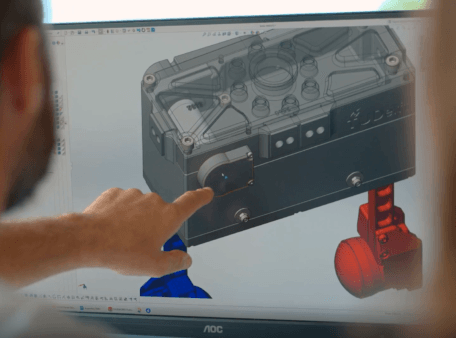
Neo is an automation system designed to prepare, dose, and fortify breast milk. Nurses simply deliver a bottle of milk to the machine, which then measures the fortifier, mixes it, distributes doses into syringes, and stores them safely in cooling. When it’s time to feed, the syringes can be warmed to body temperature for administration.
Designed for reliability, the machine uses sensors to verify bottle placement, scales to ensure dosing accuracy (of up to 0.005 g), and mixing to achieve homogeneity. These automated processes deliver more precision than manual scooping and measuring, showing strong potential to outperform manual preparation and free nurses to focus on patient care. While Neo may not function faster than a nurse would, it can run for more hours without feeling the burden of repetition, and it can provide feeding doses on time with a capacity of about 60 syringes per hour.